Munim / 5 August 2026
The ground is moving.
What I think is happening to software, why it changes what we should build, and where I think I am wrong.
What you are about to look at
Four parts, and the last one is where I need you.
About twenty minutes, and I would rather be interrupted than finish on time.
My claim
One or two people will take real customers away from very large companies.
Not that big companies die. Not that one person builds something better. Only that paying customers move, in a direction nobody expects.
Why this matters beyond us
Investing in new companies only works if a few of them get enormous.
One company in fifty has to pay for all the others. If instead thousands of people each earn a good living, that money has nothing left to buy.
A picture of the idea. The heights are not real company figures.
The honest consequence
Mostly this makes good livings, not giant companies.
Several products, each earning a fair amount, adding up to a real income. Not a company worth a hundred million.
I think that is a good outcome. It is independent, it needs nobody's permission, and it does not mean moving somewhere we do not want to live or managing thirty people.
One exceptionSomebody could get very good at running many products at once, not just building them. That would become a large company. As far as I can tell, nobody has managed it yet.
My own view, not a measurement.
The five companies in this story
Two people gave away, free, what two companies charge for.
Prices from each company's own website, 4 August 2026.
The number that started this for me
The newest of them had existed four months. The oldest took twenty-one.
All three were noticed in the same week of July 2026. The gap between starting and being noticed has collapsed.
Start dates from each project's public code. These are months until the press noticed, which is not the same as months spent building.
And it really was one person
Nearly nine in every ten pieces of the work came from the same person.
If these had been quietly funded teams there would be no story. I checked who wrote every single change.
Counted from each project's public code, 4 August 2026. A "piece of work" is one saved change, like one revision to a drawing.
Two companies it has already happened to
This is not a prediction. Two companies have already come apart.
Chegg, homework help for students
Sales fell 39% in a year. Paying students went from 3.2 million to 2.6 million. The share price is down 99%.
Jasper, an AI writing tool
It was valued at $1.5 billion. Forty-three days later ChatGPT became free to everyone. Its sales roughly halved.
Both were real businesses with real paying customers, and neither made an obvious mistake.
Something arrived that made what they sold not worth paying for.
Chegg from its own published results. Jasper's sales figures are outside estimates, not audited accounts.
Now the part that argues against me
If free copies were really hurting them, prices would have fallen. They have not.
Wispr Flow has charged the same $15 a month on every date I could check, seventeen months apart, and gives away no more than it used to. Whoop still charges $199 a year, unchanged since May 2025.
Read from Wispr Flow's own pricing page on 12 March 2025, 10 December 2025 and 4 August 2026.
And the free copies are smaller than they sound
The headline said three and a half million. It is about seventy-seven thousand people.
Every copy already installed keeps asking the website whether a newer version exists, and each of those questions was counted as a download.
Counted file by file from the project's public download page, 4 August 2026.
So I had the danger wrong
It is not the free copy that kills them.
It is a company that already has the customer's attention, giving the same thing away for nothing.
How that actually works
We pay for seven things to reach one customer. They pay for one.
Everything expensive about reaching a person, they built and paid for years ago. One more feature costs them almost nothing, so they can give it away, and nobody can compete with free.
An explanation of how big companies add features, not a measurement.
What it looks like when it happens
It does not look like a collapse. The price for one person just disappears.
Granola, an app that takes notes in meetings, charged individuals $18 a month in September 2025. By November that price had gone. There was a free version, and a version for companies.
Granola's own pricing pages, captured 3 September 2025 and 4 November 2025.
Where a small company might still stand
Four things a big company cannot simply give away. This part is a guess.
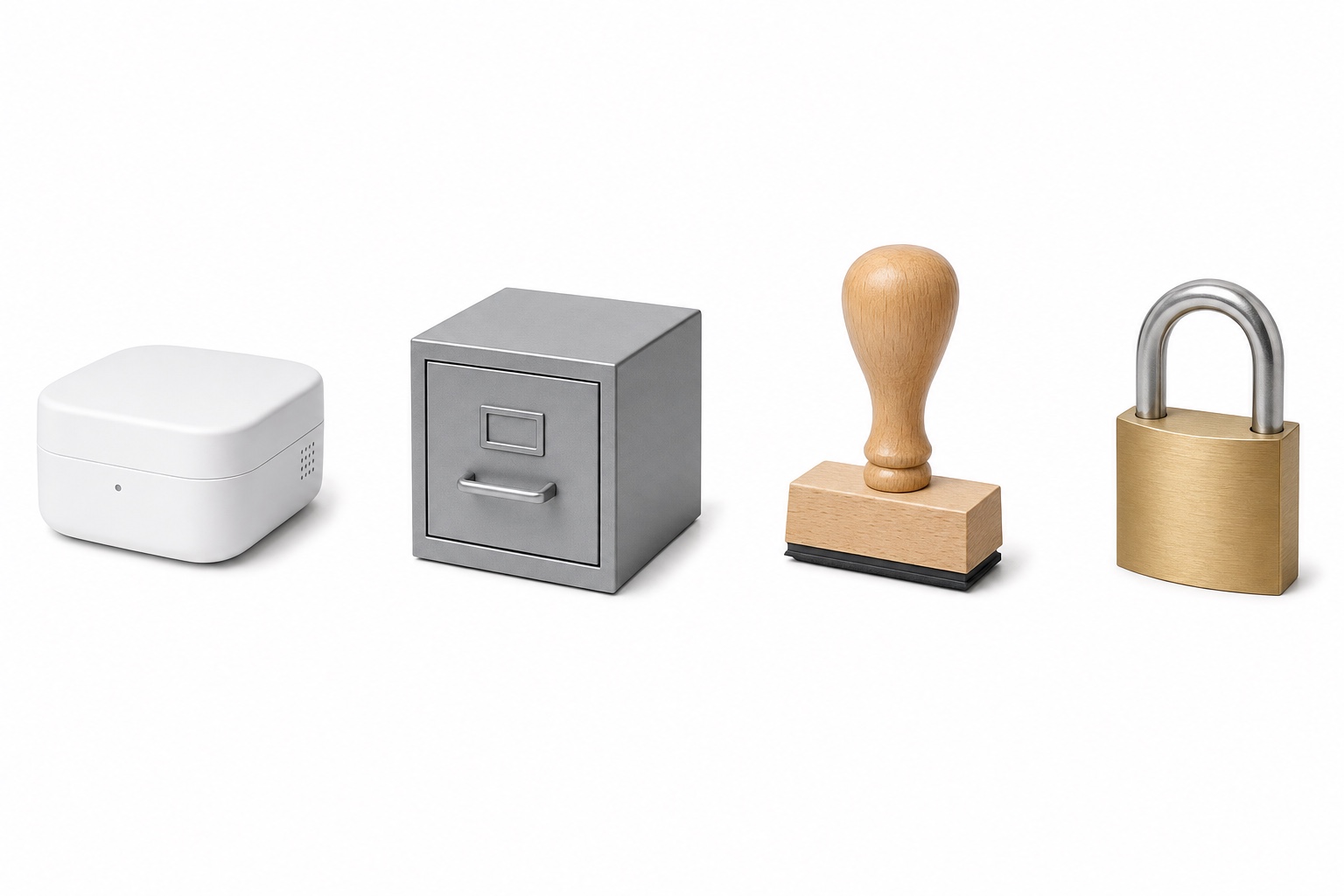
Something physical
It has to be manufactured and posted.
Years of their records
Leaving would cost them their own history.
A licence to operate
Others are not permitted to just appear.
Safe enough to buy
A big employer is allowed to depend on it.
I expected records to be the strongest of these four. In the cases I looked at, it was the weakest.
An instinct, not an argument
I think the serious money moves to things you can hold.
Buildings and land. Food. Toys and things people collect. And the things only a person can be: an audience of your own, and an artist.
This list is unfinished on purpose. Property and construction are your world, not mine.
What we actually do, and when
Two speeds at once, starting this month.
My proposal. These dates are what I think is achievable, not something either of us has committed to.
The gap neither speed closes
Nobody has heard of us, so every product starts from nothing.
Big companies win because they already have people's attention. The only version we can own is our own channel, on TikTok and YouTube. Neither of us has to be on camera.
The hard partNot the filming. Deciding what the channel is about, because nobody follows a company they have never heard of. That is a taste question, so it is more yours than mine.
Where I need you
I can build almost anything. I cannot tell which problem is worth solving.
On a construction project I would not know who signs a decision off, what a site is actually doing at eight in the morning, or why the obvious answer is not already being used.
You have years of that and I have none. I will do the same in health, but only where it stays well away from treating patients.
What I am asking forNot a decision today. A week of thinking about it together, and your honest verdict on which of these problems are real.
If you think a problem is not real, that is the most useful thing you can tell me.
Buildings, property, construction, and the very large data-centre projects being built right now.
The question I want us to keep open
If the machine had no limits, what becomes possible?
Assume it can hold everything in mind at once, that you can run thousands of them at the same time, and that the hardware is nearly free. Which problems stop being impossible?
One deliberately silly example
People are seriously trying to put computers in orbit.
Sunlight up there is constant and cooling is free. The engineering is genuinely hard, and it is nobody's field, least of all mine. I am not suggesting we build one.
The part that does transferWhen a field is new and hard and moving fast, the people inside it are too busy to build their own tools. That gap is the opening, and it has nothing to do with space. It is just as true of construction.
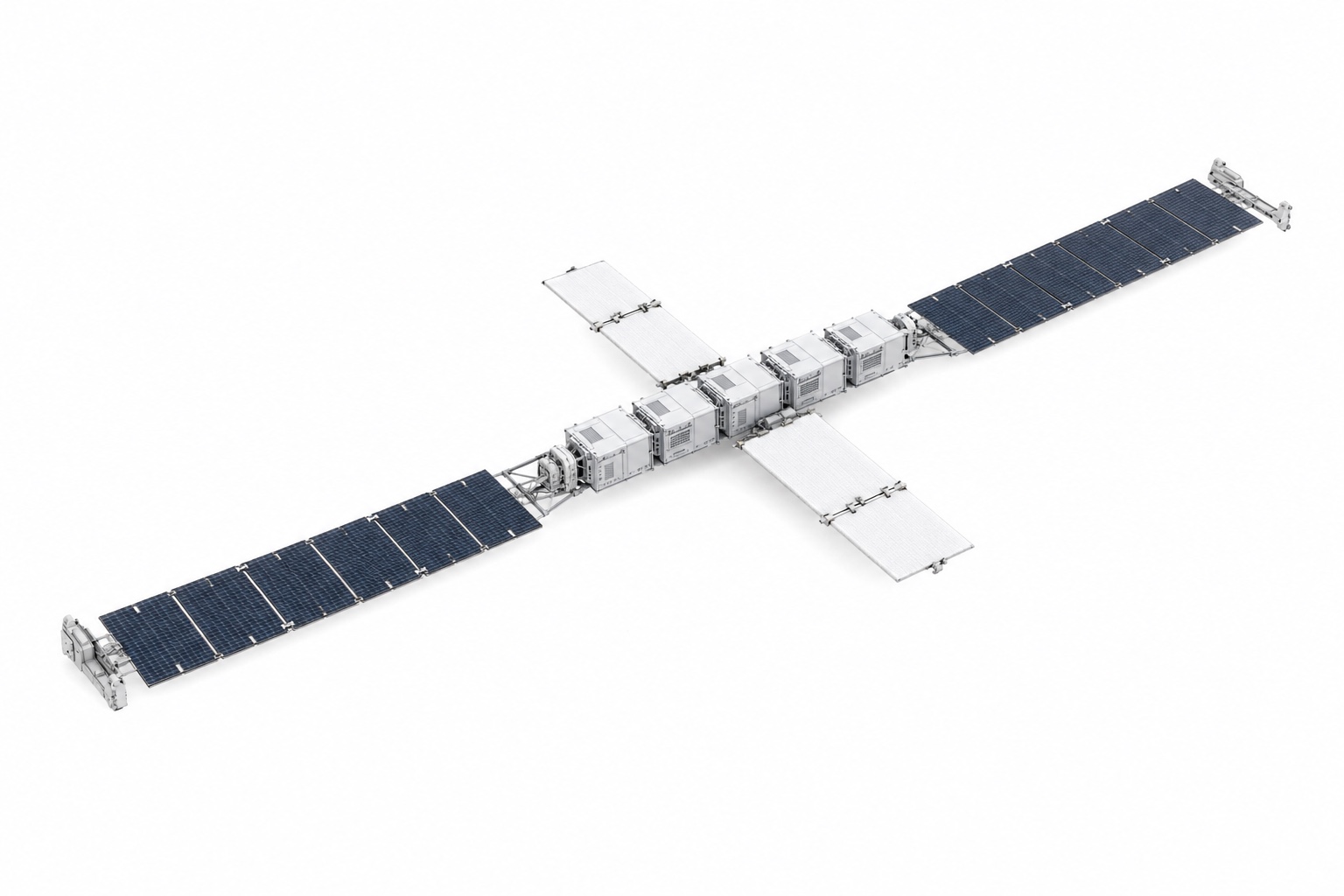
An illustration, not a proposal.
Please attack this page hardest
Seven ways I might be wrong.
1The four-months figure measures when the press noticed, not how long building took.
5We have not spoken to a single customer, across eight ideas in fifteen months.
2No free copy has made any company drop its price. Not once, anywhere I looked.
6A month ago I argued the opposite: build one thing deeply, not many cheaply.
3Free has lost this fight before. A free version of Photoshop has existed since 1996.
7Nobody has clearly succeeded at running many products at once.
4VoiceInk costs $29 to $40, so "free copies" is not quite what happened.
I wrote these by asking what somebody who wanted my argument to be wrong would say first.
So this is not just an opinion
If I am right, at least two of these happen by next August.
Written down today, with a date, so it cannot be quietly changed later to fit whatever happens.
The whole thing in one page
Build several small things now. Start one big slow one, with you.
Two things I want from you: which of my seven doubts is strongest, and which problems in your world are actually real.